Pad work training Miami athletes seek should feel more purposeful than throwing combinations until the timer ends. A good round on the pads teaches you where to stand, when to move, how to hit with balance, and how to stay composed when your lungs are working hard. It is one of the fastest ways to turn basic punches, kicks, knees, and defense into skills you can actually use.
For adults around Little Havana, Allapattah, Downtown Miami, Midtown, and Wynwood, pad work offers a rare combination: serious technical instruction and a full-body workout that does not feel like another routine at a crowded fitness studio. You are learning a combat sport, working with a coach, and building the kind of confidence that comes from measurable improvement.
What Great Pad Work Training in Miami Should Teach
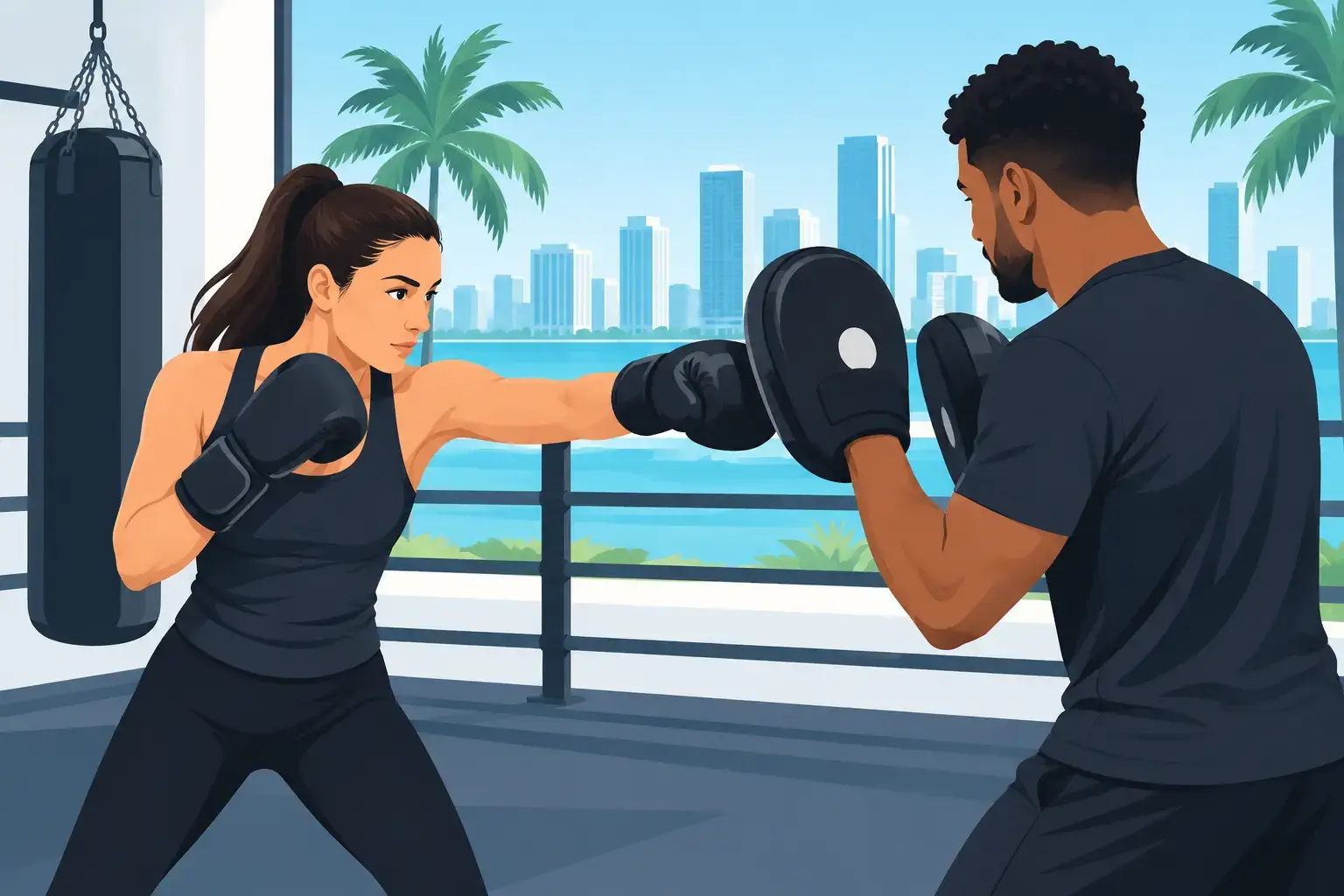
Pads are not just targets. They are moving coaching tools. A knowledgeable pad holder controls distance, calls the right combination for your level, gives you visual cues, and makes you respond with proper timing. The work should demand focus from both people in the round.
At the beginner level, that may mean learning a clean boxing stance, returning your hands to guard, and landing a jab-cross without reaching or falling forward. In kickboxing and Muay Thai, it also means understanding range for kicks, how to turn the hip, and how to recover your stance after every strike. The point is not to look busy. The point is to build habits that hold up when the pace increases.
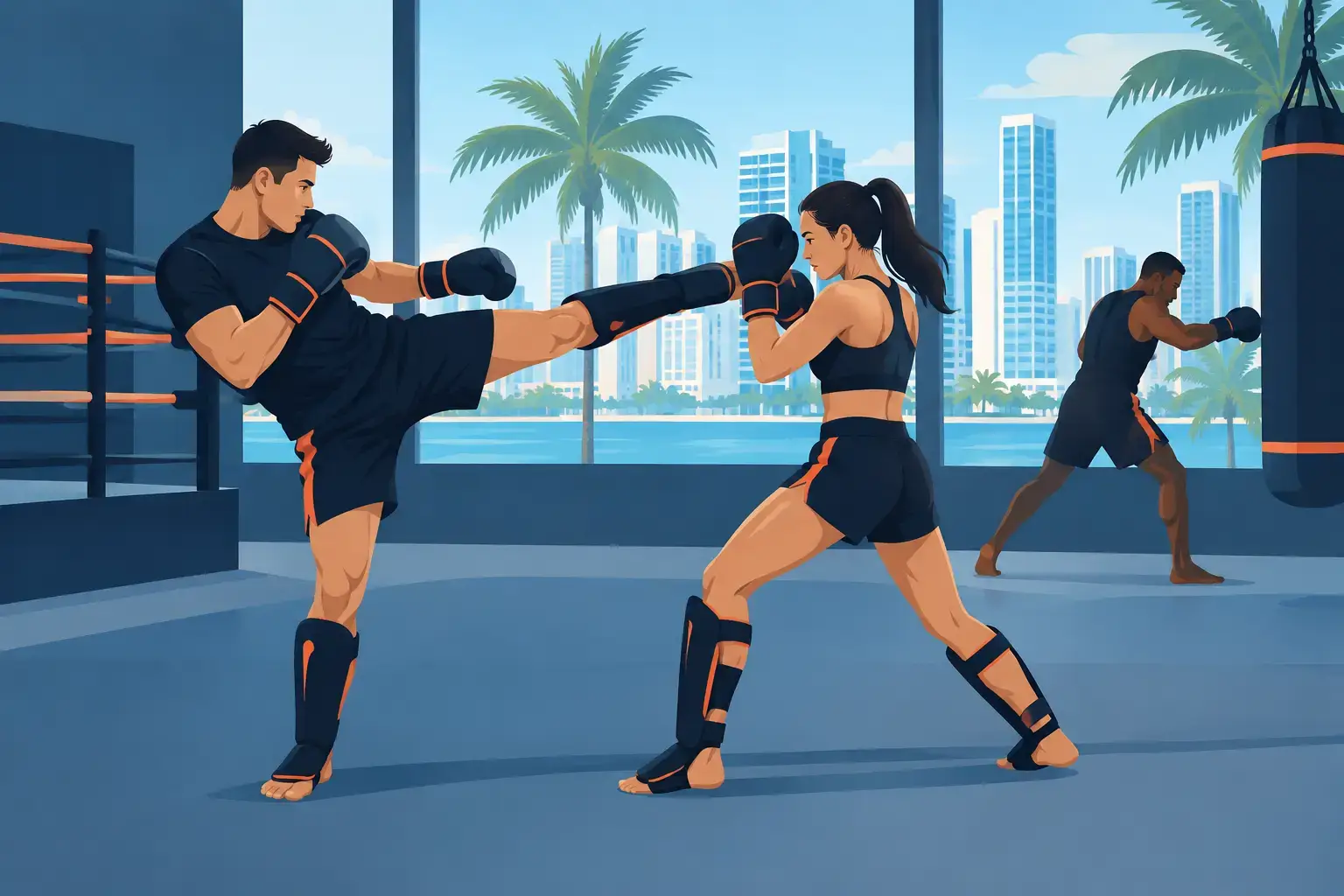
As you develop, pad rounds become more layered. A coach may have you jab your way into range, defend a return, angle out, then counter with a body kick or knee. You might work Dutch-style punch-kick combinations, close-range boxing, teeps, elbows, or a clinch entry depending on the class and ruleset. Each piece has a reason. You are practicing offense, defense, footwork, and decision-making together.
That is why pad work can serve different goals without becoming watered down. A new student gains coordination and confidence. A fitness-focused member gets demanding intervals with a technical purpose. An active fighter sharpens specific combinations, reactions, and ring movement before sparring or competition.
Technique Comes Before Speed and Power
Miami has no shortage of high-energy workouts. But sweat alone does not build striking ability. If a class encourages people to swing hard before they understand stance, posture, and mechanics, bad habits can become hard to correct. Power starts with structure.
A quality coach will show you how to put weight into a punch without overcommitting, how to rotate a kick without losing balance, and how to breathe through combinations rather than holding your breath. They will correct small details that matter: chin position, shoulder protection, hand return, pivot, distance, and the angle of the shin or knee.
This approach does not make training easier. It makes hard training more useful. When your technique improves, you can strike with more force while wasting less energy. You can also train more consistently because your body is moving the way it should.
The same principle applies to pad holding. Holding pads well is a skill, not a break between rounds. A trained partner presents safe targets, meets strikes correctly, gives clear signals, and creates realistic rhythm. In a serious gym, members learn to become better partners as well as better strikers. That creates a room where everyone can improve.
What a Typical Pad Round Can Include
A well-run pad round usually begins with a focused objective rather than a random series of calls. One day may center on boxing entries and exits. Another may emphasize kick defense and counters. In a Muay Thai session, the round may blend hands, kicks, knees, and clinch-range attacks.
The intensity depends on your experience and current condition. A first-time student may work shorter rounds with simple combinations and frequent feedback. More experienced athletes may work longer rounds with changes in tempo, defensive reactions, conditioning bursts, and fight-specific pressure. Both should leave with a clearer understanding of what to improve next.
The Conditioning Benefit Is Real, but It Is Earned
Pad work challenges the whole body. Your legs drive movement and absorb impact. Your core transfers force and keeps you stable. Your shoulders and arms work through repeated punches, while your cardiovascular system has to keep up with the pace. It is demanding in a way that feels active, focused, and earned.
Still, conditioning should be built intelligently. Going all out in every round can turn technique into survival mode, especially for beginners. There are days to push the pace and days to sharpen movement with more control. A good coach adjusts the session so you are challenged without being thrown into chaos.
Consistency beats occasional punishment. Two or three structured striking sessions each week can improve your endurance, coordination, and body composition while giving you a practical skill to build on. If your goal is general fitness, pad work can stand on its own or complement strength training. If your goal is competition, it becomes one part of a larger plan that includes drilling, bag work, clinch work, sparring, recovery, and roadwork.
Pad Work Training Miami Beginners Can Actually Enjoy
The hardest part for many people is walking through the door for the first time. They may worry that everyone is already experienced, that they will not know the combinations, or that combat sports gyms are only for fighters. The right environment removes that pressure without lowering the standard.
You do not need prior boxing, kickboxing, or Muay Thai experience to start. You need a willingness to listen, practice, and be patient with the learning curve. Early classes should give you clear fundamentals, manageable combinations, and coaching that explains the why behind each correction.
Expect to feel challenged. Your first few sessions may expose muscles you do not normally use, and coordinating hands, feet, and breathing can take time. That is normal. Progress often arrives quietly: your stance feels less awkward, you hear combinations more clearly, your kicks land with better balance, and rounds that once felt impossible become manageable.
A respectful training community makes that process better. Training beside active fighters can be motivating when the culture is supportive. You see what disciplined practice looks like, while still receiving instruction appropriate to your level. At Vice City Striking, the goal is a room where beginners can build a foundation and serious athletes can keep raising the bar.
Choosing the Right Pad Work Class
Before committing to a gym, pay attention to how coaching happens on the floor. Are instructors correcting technique, or simply calling out combinations from across the room? Are beginners given a path to learn safely? Does the class include footwork and defense, or only offense? These answers tell you whether the program is designed for lasting progress.
Coach experience matters, too. Fighters and coaches with real competition and international training backgrounds understand the difference between flashy movement and reliable fundamentals. More than that, they know how to scale training. Not every member needs the same intensity or the same drill on the same day.
A clean, respectful space matters just as much. You should feel comfortable asking questions, taking a rest when needed, and returning for your next session. Serious training does not require an intimidating atmosphere. It requires accountability, good partners, and coaches who care whether you are improving.
Turn Each Round Into a Skill-Building Round
Come to pad work with one simple focus. It could be keeping your hands home after every punch, exhaling on strikes, pivoting cleanly on your rear kick, or looking up instead of down. One clear goal gives the round direction and gives your coach something specific to refine.
Do not chase power at the expense of balance. Hit the pads with intent, then reset your stance. Listen for feedback, ask questions after class, and let repetition do its job. The sharpest strikers are rarely the people trying to win every round. They are the people willing to correct one detail until it becomes automatic.
If you have been thinking about trying a class, book your free class and let the first round answer the question. You do not need to arrive as a fighter. You only need to start with a coach, a pair of pads, and the willingness to learn something real.