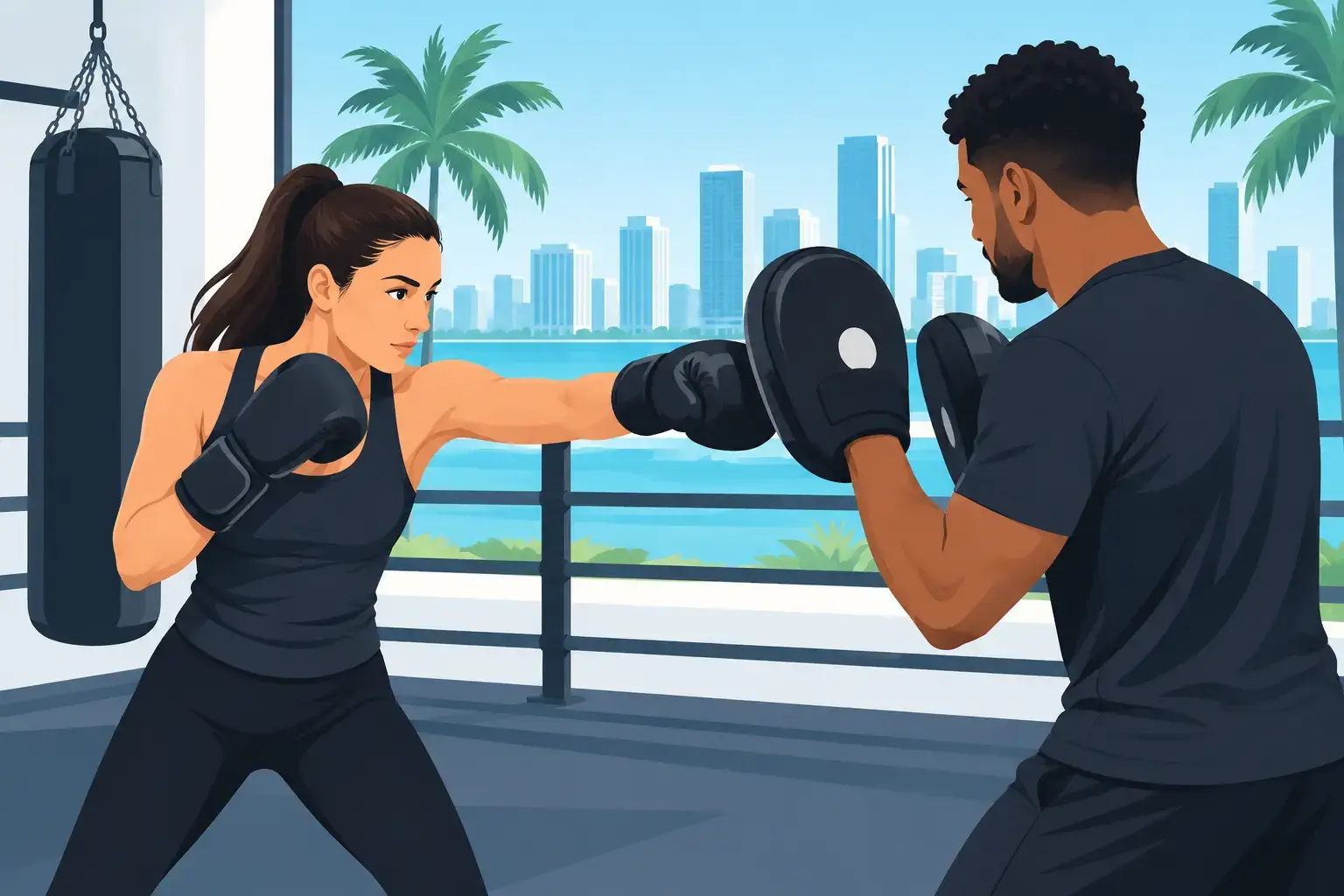
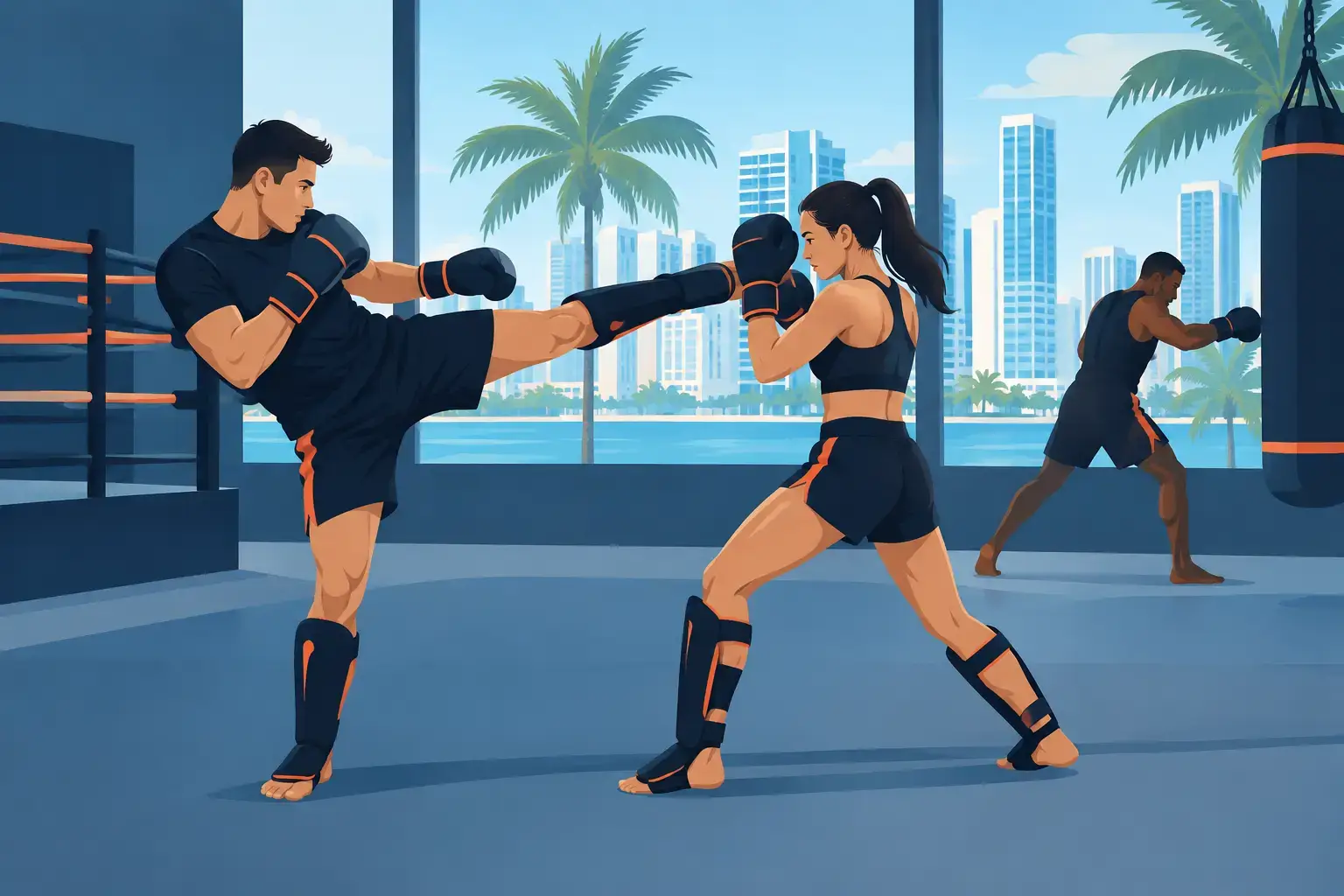
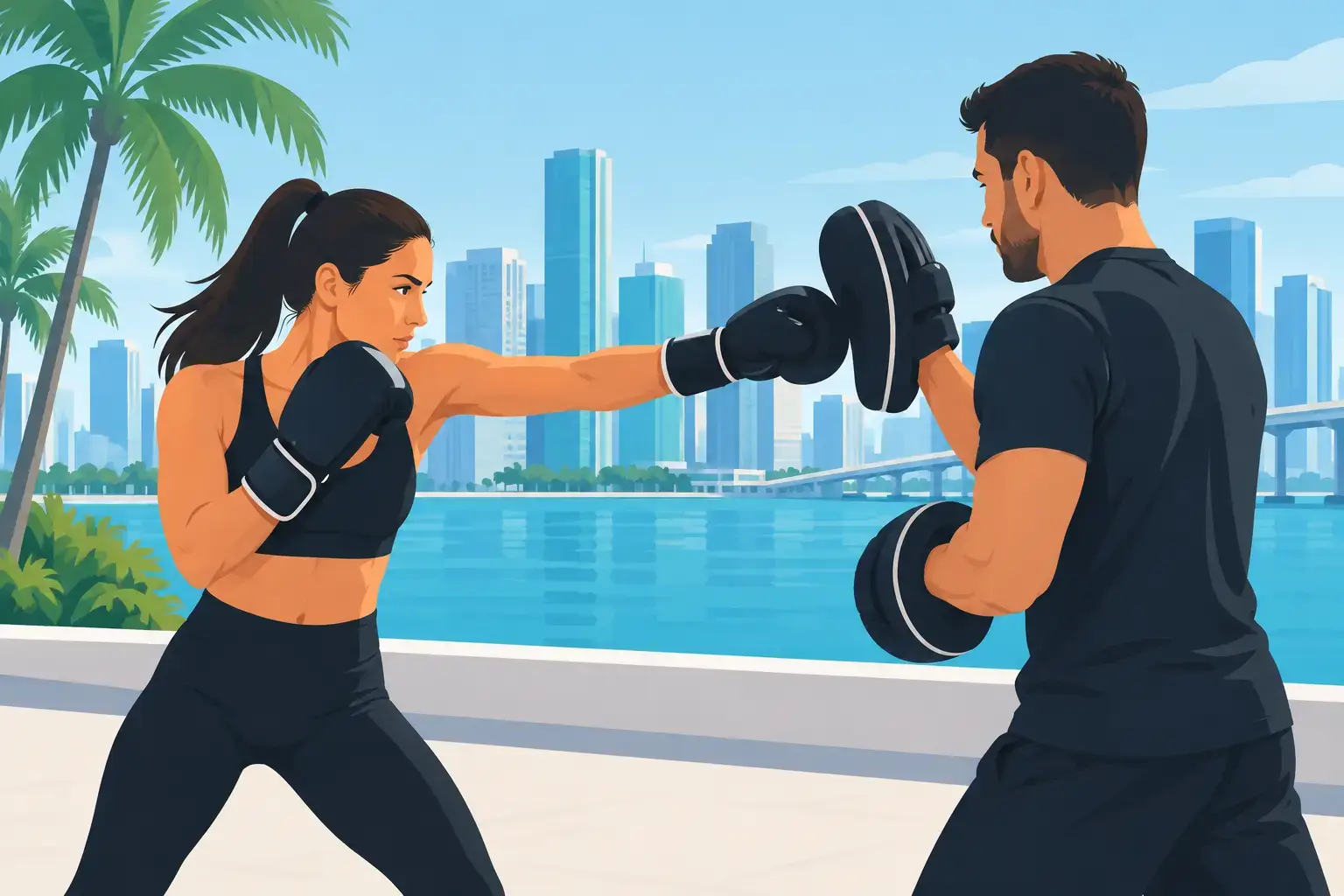
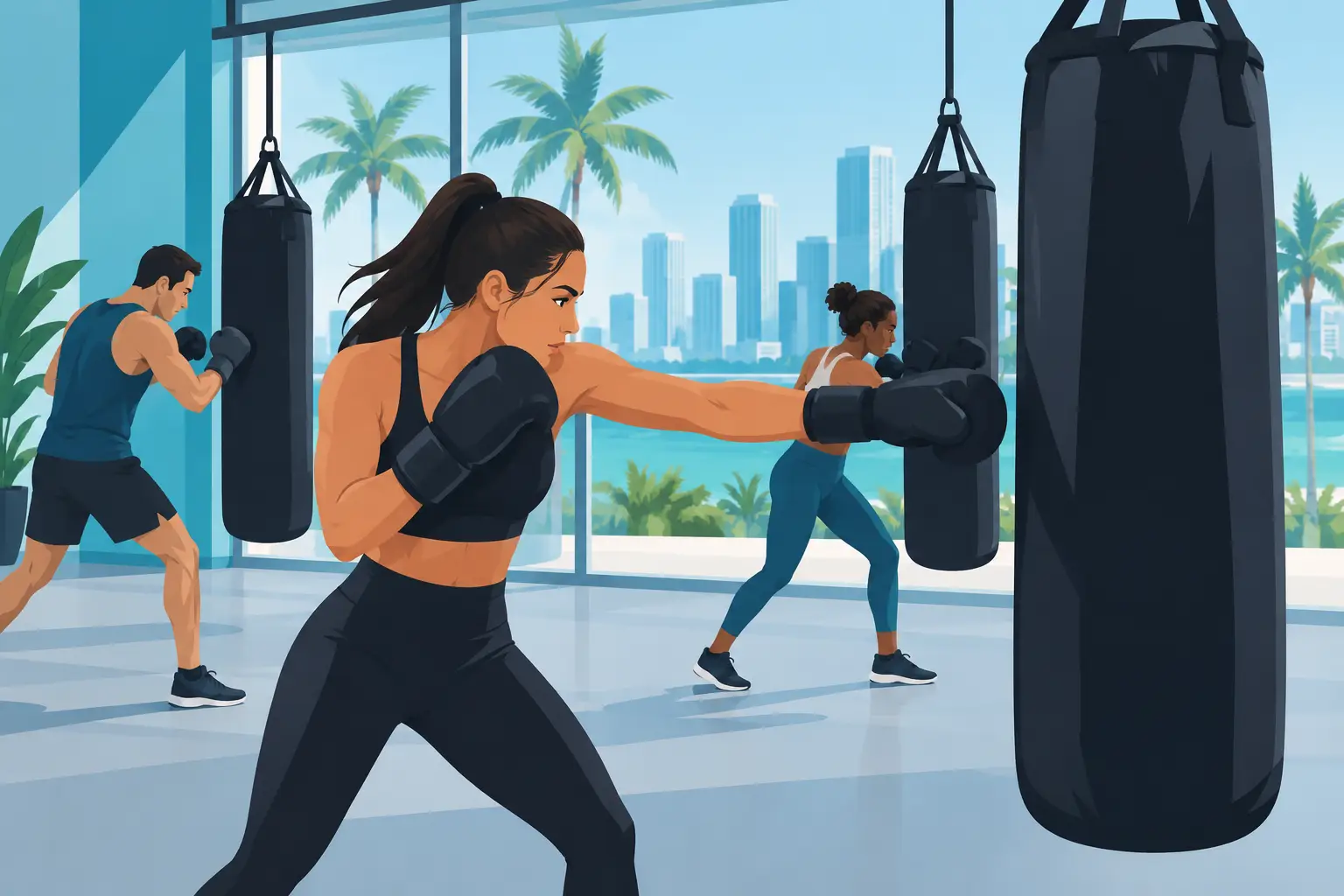
A clean body kick can win attention. A strong clinch can take control of the entire exchange. In Muay Thai clinch training Miami athletes learn how to close distance safely, break an opponent’s posture, create knees and elbows, and stay composed when the fight gets physical.
For beginners, the clinch is often the part of Muay Thai that looks intimidating from across the gym. Two people are chest-to-chest, fighting for head position, arm control, balance, and space. But quality coaching turns that pressure into a technical skill. You do not need prior martial arts experience or competition goals to benefit from clinch work. You need a willingness to learn position by position, rep by rep.
Why the Muay Thai Clinch Is Different
The Muay Thai clinch is not simply grabbing someone and throwing knees. It is a standing control system built around posture, leverage, timing, and balance. Your goal may be to establish a secure collar tie, control the inside position with your arms, turn your partner off line, or create enough space to strike without giving up your base.
That makes the clinch valuable for far more than fighters. It develops body awareness under pressure. It teaches you how to stay upright when someone is pulling, pushing, or trying to move you. It demands conditioning from your grip, back, core, hips, and legs while challenging you to think clearly when your breathing gets heavy.
A good clinch is not about muscling through every round. Size and strength can help, but technique matters more than many newcomers expect. A smaller athlete with better posture, frames, and timing can make a larger partner work hard. That is why structured instruction matters from the first class.
What Muay Thai Clinch Training in Miami Should Teach
In a serious class, clinch work starts with the details that make everything else possible. Before throwing knees, students need to understand stance, posture, and how to protect their balance. If your feet are too close, your hips are too square, or your head is in the wrong place, a skilled partner can turn you easily.
Position Comes Before Power
Students learn how to enter the clinch from a safe striking range, often after a punch, kick, or defensive movement. From there, coaches break down common positions such as the double collar tie, single collar tie, inside biceps control, and basic over-under control.
Each position has a purpose. The double collar tie can help control posture, but it is not automatically dominant if your opponent has strong inside frames. Inside arm position can limit their ability to tie up your head. A frame across the collarbone or shoulder can create room when the clinch becomes crowded. Training these transitions teaches you to stop freezing once the first grip is broken.
Balance, Turns, and Off-Balancing
The most satisfying part of clinch training is often the turn. Rather than trying to drag someone around with your arms, you learn to use foot placement, hip position, and a controlled pull-and-steer motion to take away their base.
Turns are not reckless throws. In a well-run class, partners work with control and respect. The goal is to off-balance someone without yanking their neck or sending them carelessly to the mat. This creates a safer room and better technical habits, especially for people new to contact training.
Knees With Purpose
Knees in the clinch require more than lifting a leg. You need posture to stay balanced, control to keep your partner from crowding the strike, and enough awareness to return your foot safely to the floor. Coaches should teach where the knee is traveling, how to protect the supporting leg, and how to avoid overcommitting.
Pad and bag work can build powerful knees, but partner drilling teaches distance and timing. Both matter. A fighter needs force, while a recreational student needs control and confidence. The right program develops each without treating every round like a hard sparring session.
The Fitness Benefits You Feel Outside the Gym
Clinch rounds make the body work in a different way than hitting a heavy bag. Your forearms and hands fatigue from gripping. Your upper back works to maintain posture. Your legs stay active as you step, base, turn, and resist being moved. Your core has to transfer force while keeping you stable.
It is also an honest conditioning test. You can be strong in the weight room and still find two minutes of controlled clinch work demanding. The constant hand fighting and positional adjustments leave little room to rest. Over time, that effort improves cardiovascular conditioning, muscular endurance, and the ability to recover while under pressure.
For busy adults around Little Havana, Allapattah, Downtown Miami, Midtown, and Wynwood, this makes clinch training a productive alternative to repetitive cardio. You are not just burning through a workout. You are building a skill that asks your body and mind to work together.
Is Clinch Training Safe for Beginners?
Yes, when the gym has clear standards and coaches who actively supervise. The best beginner experience is progressive. You learn the stance before the turn, hand fighting before hard knees, and controlled positional rounds before higher-intensity work.
Partners should be matched thoughtfully whenever possible, and experienced students should understand how to give newer members useful rounds. That does not mean training is soft. It means intensity has a purpose. You can push your conditioning while still respecting your partner’s neck, knees, and learning curve.
Communication matters, too. If a grip feels uncomfortable, if you are unsure how hard to knee, or if a partner is moving faster than you can process, speak up. A respectful Muay Thai room makes room for questions. The goal is to train consistently, not prove toughness by ignoring avoidable problems.
How Often Should You Train the Clinch?
It depends on your goals and your current level. A beginner can make real progress with one focused clinch session per week, especially when regular striking classes reinforce footwork, defense, and balance. Two sessions per week can accelerate improvement once the basic positions feel familiar.
Active fighters often need more frequent, specific rounds because clinch timing fades without repetition. They may work on entries after particular combinations, defending against strong knee fighters, or maintaining control against different body types. Recreational students may prefer a balanced schedule of foundations, bags and pads, striking drills, and clinch work.
Consistency matters more than cramming. Showing up weekly lets your body learn the subtle reactions that make the clinch effective. You begin to recognize when a partner is pulling, when their weight is too far forward, and when a small step can change the whole position.
What to Expect at Vice City Striking
At Vice City Striking, clinch training is taught as part of real Muay Thai development, not as a random fitness finisher. Coaches with fight experience provide technical feedback on posture, entries, hand position, knees, turns, and defensive reactions. Beginners get a clear path into the work, while experienced athletes have room to sharpen the details that matter in live rounds.
Expect a clean, respectful environment where men and women at different levels can train seriously together. You may spend part of class drilling a single position, then build toward controlled partner rounds that test your timing and conditioning. The pace can be demanding, but no one needs to arrive already knowing how to clinch.
If you have only trained boxing or kickboxing, expect the clinch to expose new habits. You may need to stand taller, manage a closer range, and become more patient with your hands. That adjustment is normal. With good coaching, the discomfort becomes confidence.
Start Close, Learn Control
The clinch rewards patience. It teaches you that control is often created through small details: a better frame, a stronger stance, a well-timed step, or the discipline to reset instead of forcing a bad position. Those lessons carry into every part of Muay Thai.
Book your free class and experience the work firsthand. Come ready to learn, train with respect, and leave with a clearer understanding of what your body can do under pressure.