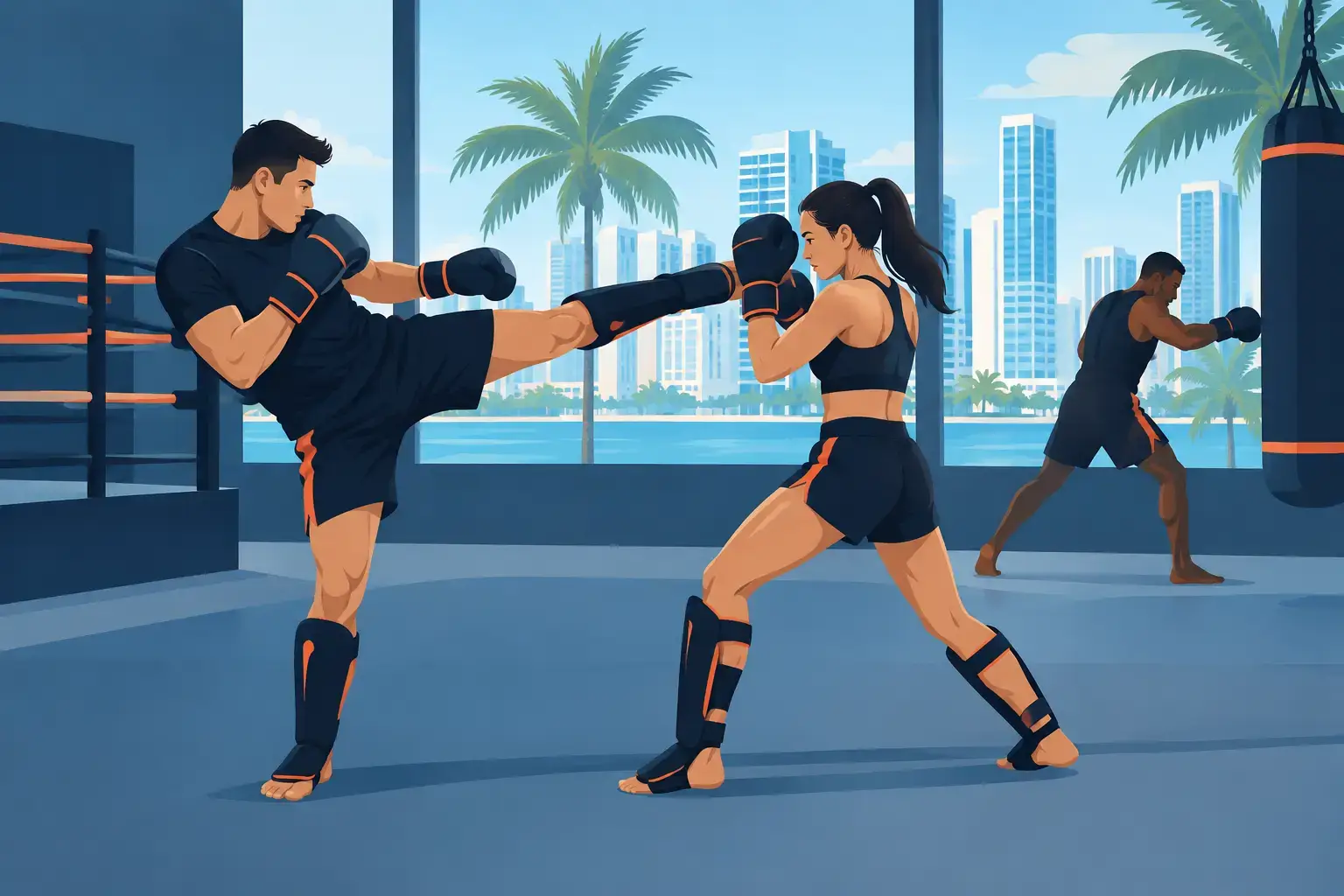
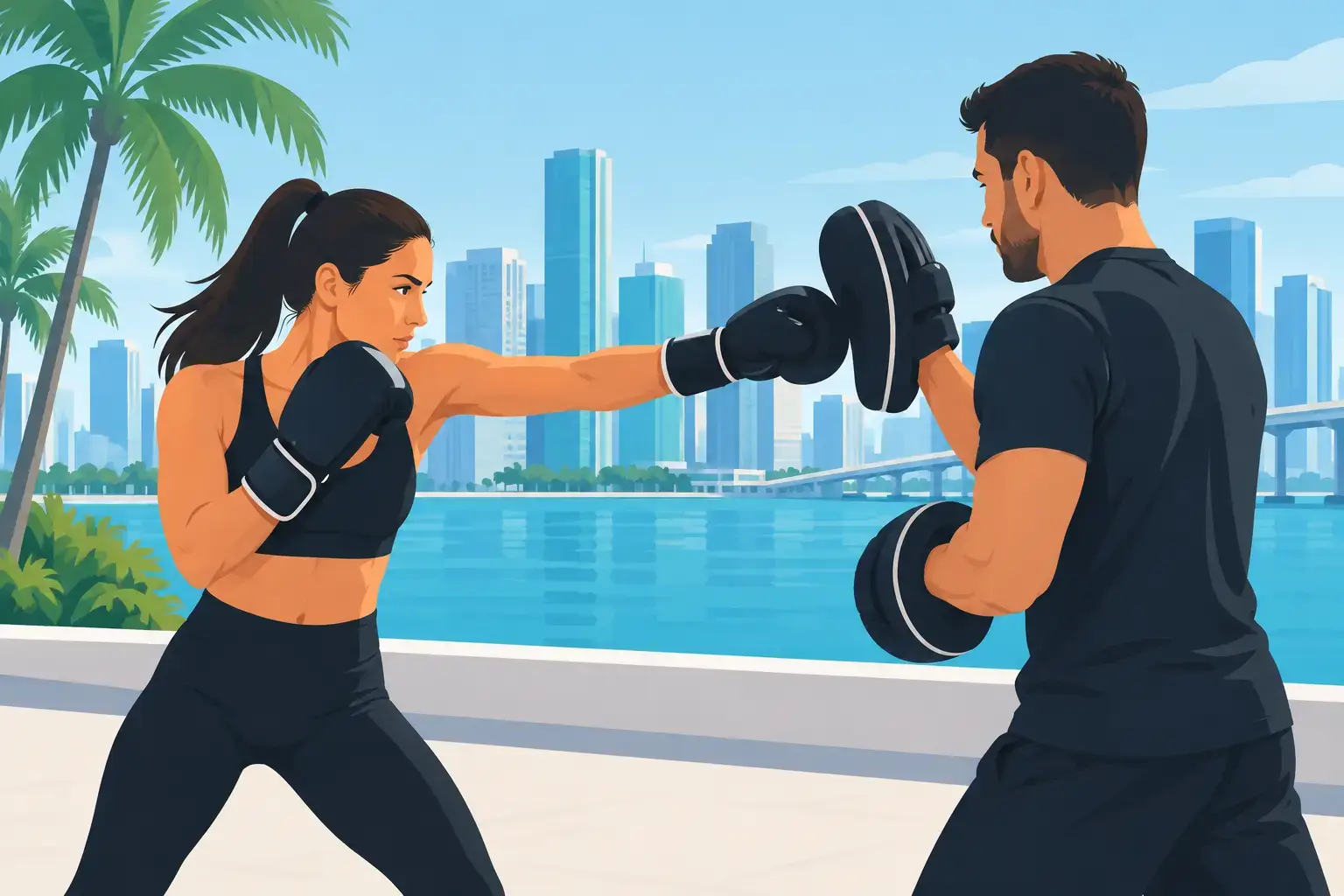
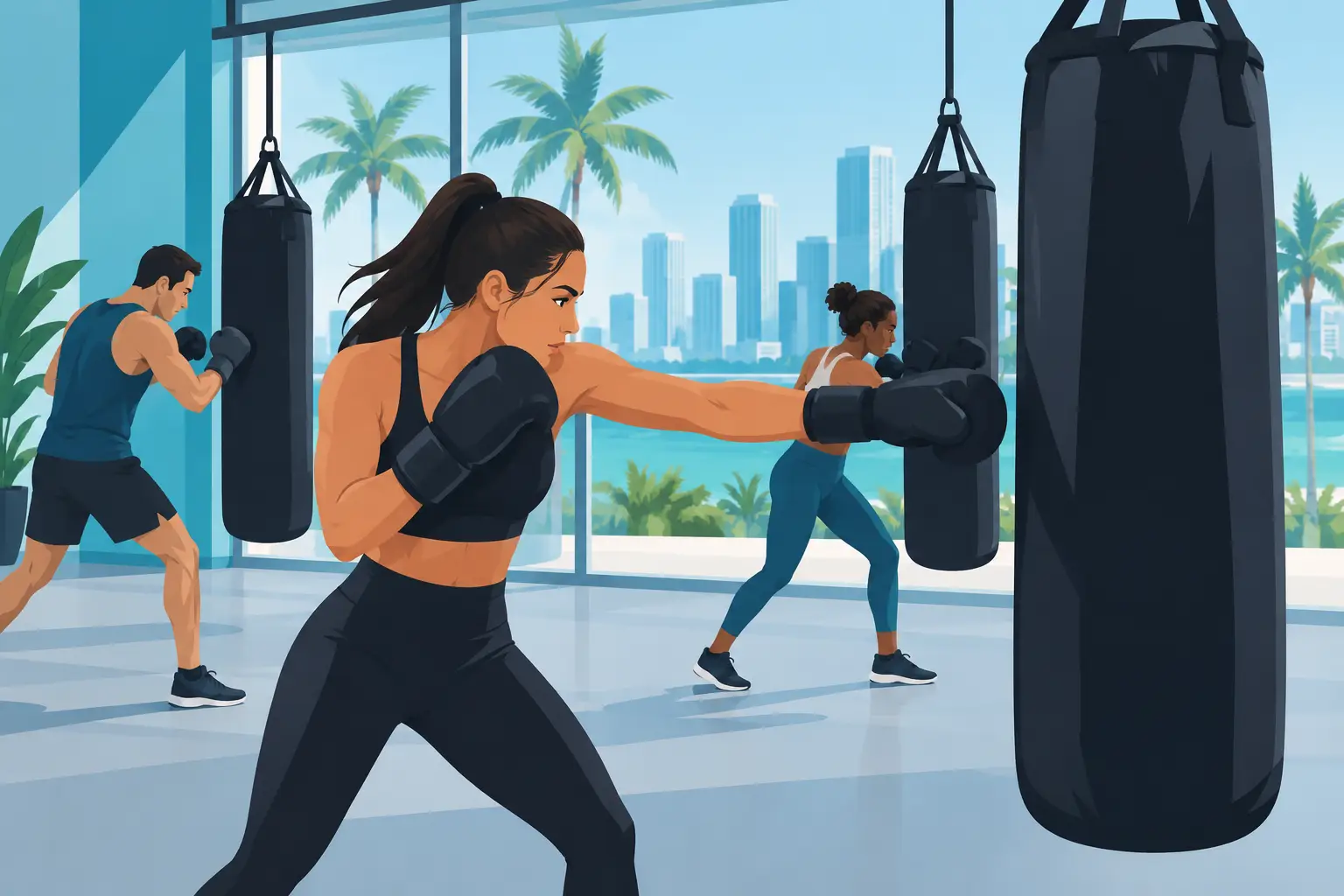
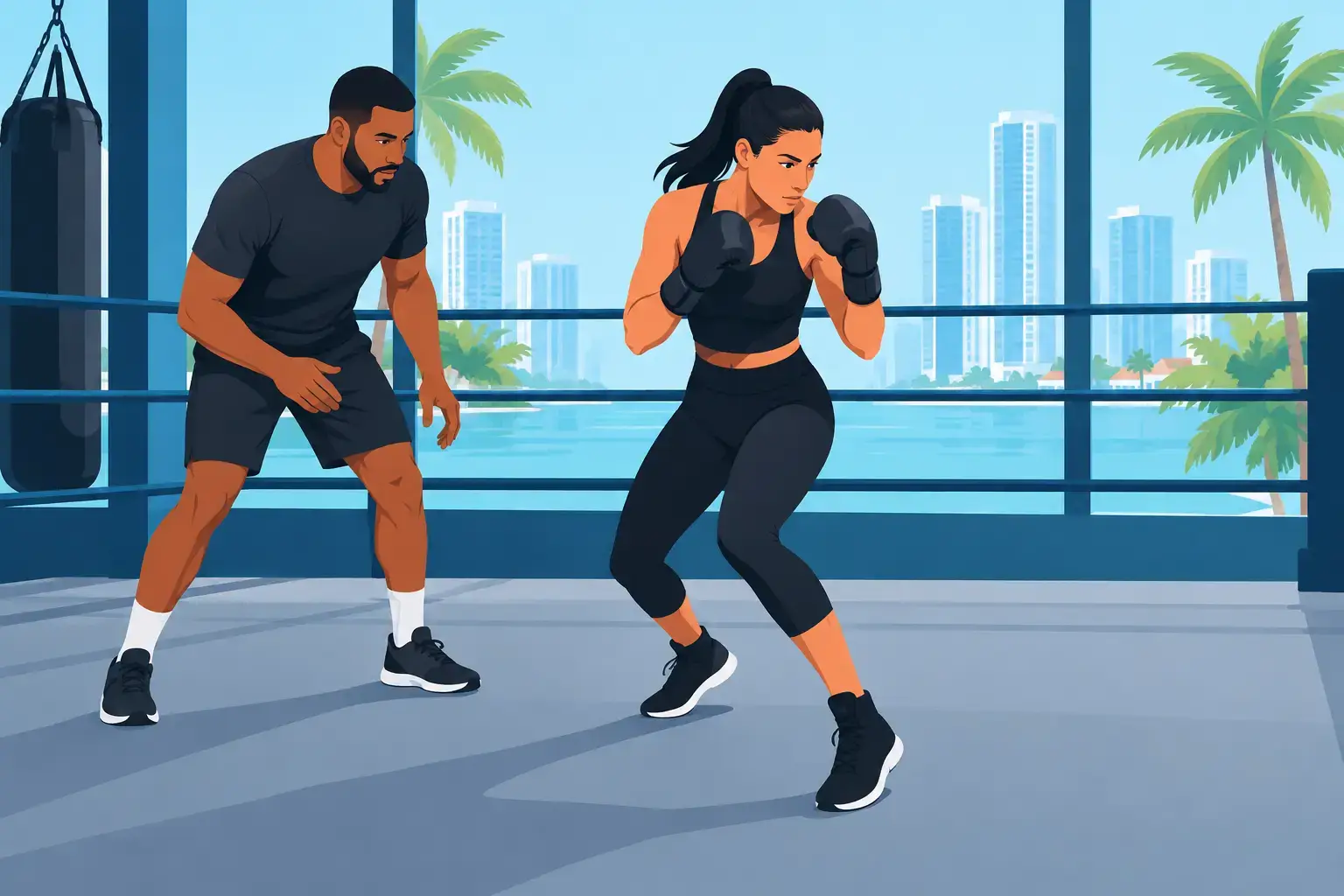
A good boxing fundamentals class Miami beginners can trust should not start by throwing people into hard rounds and hoping they figure it out. It should start with the details that keep you balanced, sharp, and safe: how to stand, move, defend yourself, and deliver a clean punch without wasting energy.
For adults around Little Havana, Allapattah, Downtown Miami, Midtown, and Wynwood, boxing can be far more than a workout. It is a disciplined way to build conditioning, release stress after work, develop confidence, and learn a skill that improves every time you train. The right first class makes that process feel challenging without making it intimidating.
What a Boxing Fundamentals Class in Miami Should Teach
Boxing looks simple from the outside. Two gloves, a heavy bag, a few combinations. But effective striking is built from connected skills. If your stance is unstable, your punches lose power. If your hands do not return to guard, you leave openings. If your feet stop moving, you become an easy target.
That is why fundamentals matter. A coach-led class should give you a repeatable base before the intensity rises. You will learn how to set your stance, distribute your weight, keep your chin protected, and move with control. From there, you can build the jab, cross, hook, and uppercut with sound mechanics instead of simply swinging at pads or a bag.
The goal is not to make every round easy. You should sweat, work, and feel your lungs. The difference is that hard work has a purpose. Every drill should help you understand distance, timing, defense, or conditioning.
Stance and Footwork Come First
Your stance is your starting position for offense and defense. Most beginners need time to learn how wide to stand, where to keep their weight, and how to avoid crossing their feet when moving. These details can feel basic, but they are what allow you to hit with balance and reset quickly.
Footwork is not about bouncing around the room. It is about maintaining range. Step forward to pressure, step back to create space, and move laterally without giving up your position. A strong class teaches this slowly enough that you understand it, then gives you drills that make it automatic.
Punching Technique Is More Than Throwing Hard
Power comes from the floor through your legs, hips, torso, and shoulder. Your arm is the final part of the chain. Beginners often try to create force by tensing their shoulders or overreaching, which can drain energy and make the punch easier to see.
A technical coach will help you turn the hip, rotate the fist, keep the opposite hand home, and return to guard after each shot. The jab teaches range and rhythm. The cross teaches rotation and alignment. Hooks and uppercuts add angles once you can maintain posture and control.
Speed matters, but clean technique comes first. As your form improves, speed and power have something solid to build on.
Defense Builds Real Confidence
There is a big difference between hitting a bag and learning to box. Boxing includes defense: a disciplined guard, head movement, blocks, parries, and smart exits after a combination.
You do not need to spar on day one to train defensive awareness. A beginner class can use partner drills, coached pad work, and movement exercises to teach you how to stay composed while responding to pressure. For people interested in practical self-defense, this is especially valuable. The aim is not to chase a movie-style fight. It is to recognize distance, protect yourself, stay calm, and make better decisions under stress.
What Your First Class Should Feel Like
A first boxing class should feel organized. You may be nervous walking in, especially if you have never worn gloves or trained alongside experienced athletes. That is normal. A respectful gym introduces the basics, explains the drills, and gives you a clear path into the workout.
Expect a warm-up that prepares your joints and raises your heart rate, followed by technical instruction and rounds of controlled work. You might shadowbox, practice basic combinations, hit pads, or work the heavy bag. Conditioning may include bodyweight movements, core training, or timed rounds that challenge your endurance.
You should leave tired, but not confused about what you worked on. You should also know at least one detail to improve next time. Maybe it is keeping your rear hand tighter to your cheek. Maybe it is pivoting your lead foot on a hook. Those small corrections are how a beginner becomes a capable boxer.
At Vice City Striking, the expectation is simple: show up ready to learn, and coaches will meet you at your current level. Serious instruction does not require a tough-guy atmosphere. Men and women, first-timers and experienced athletes can train hard in the same room when the coaching is clear and the culture is respectful.
Boxing for Fitness, Skill, or Competition
People start boxing for different reasons, and your training should reflect that. If your main goal is fitness, boxing delivers a demanding full-body session that keeps your mind engaged. You are not counting repetitions while staring at a wall. You are learning combinations, reacting to cues, and working against the clock.
If confidence and stress relief are your priorities, the structure of training can be just as valuable as the physical work. You learn to focus on breathing, posture, and the next task in front of you. After a long day in Downtown Miami or Wynwood, a focused hour on the mats can reset your energy in a way a standard gym session may not.
If you want to compete, fundamentals are nonnegotiable. You need conditioning, but you also need distance management, defensive habits, composure, and the ability to take coaching. Competitive development takes time. It depends on your consistency, athletic background, recovery, and willingness to learn. A quality fundamentals class is still the right place to start.
How to Get More From Beginner Boxing Training
The fastest progress usually comes from training with patience. You do not need to throw the hardest punch in the room or memorize ten combinations in your first week. Focus on arriving consistently and applying one or two corrections at a time.
Wear comfortable workout clothes, bring water, and show up a few minutes early so you can settle in. If you have your own hand wraps and gloves, bring them, but most gyms can help a new student understand what equipment is needed. Hand wraps are worth learning early because they support your wrists and knuckles during bag and pad work.
Ask questions when a movement does not make sense. Good coaches want that. Also, avoid comparing your day-one technique to someone who has trained for years. Use experienced students as proof of what consistent practice can build, not as a reason to hold back.
Outside class, recovery counts. Sleep, hydration, and basic mobility work make a real difference when you begin training several times each week. If your shoulders, wrists, or knees have a previous injury, tell your coach before class so drills can be adjusted intelligently.
Choose Coaching Over Chaos
Miami has plenty of places to break a sweat. Not every class teaches boxing. Some workouts use gloves and bags as fitness equipment, which can be a fun way to move, but it is not the same as learning a combat sport from experienced coaches.
Look for a gym where technique is demonstrated, coaches circulate to give feedback, beginners are not ignored, and advanced members still have room to grow. The best environment is demanding without being careless. You should feel pushed to improve, not pressured to prove yourself.
Your first session is simply the first round of a longer process. Book your free class, learn the stance, throw the first clean jab, and give yourself the chance to become more capable one training day at a time.