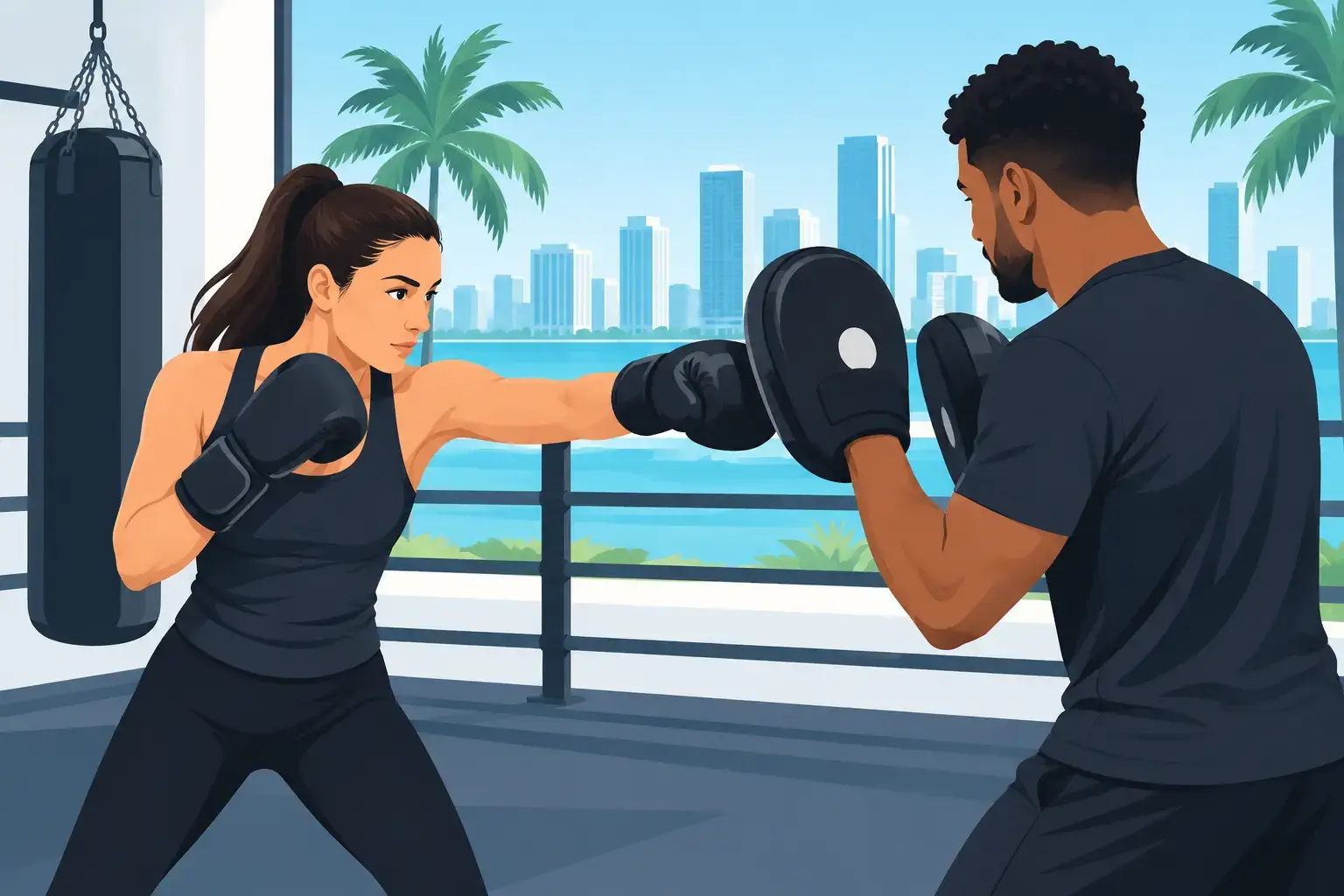
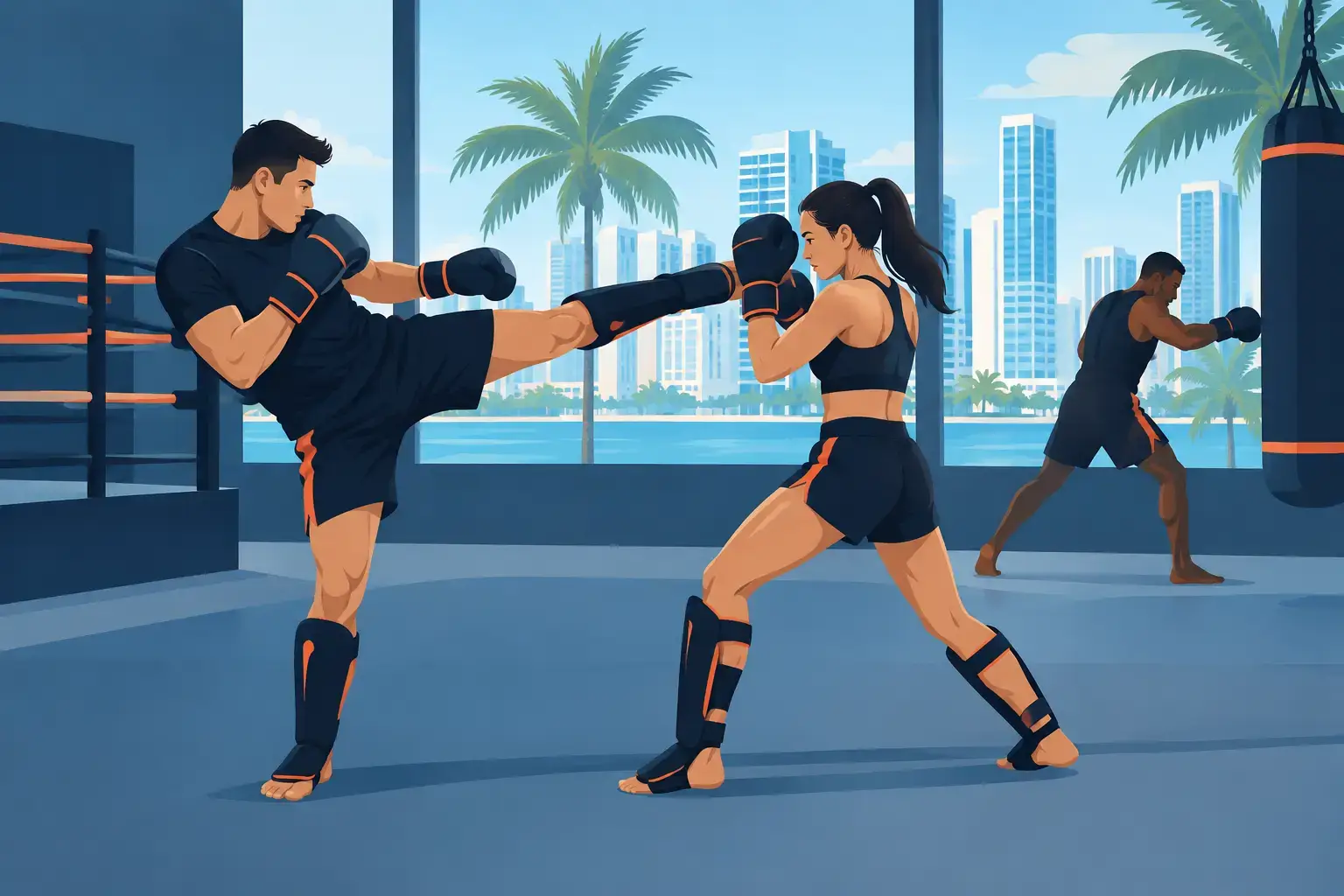
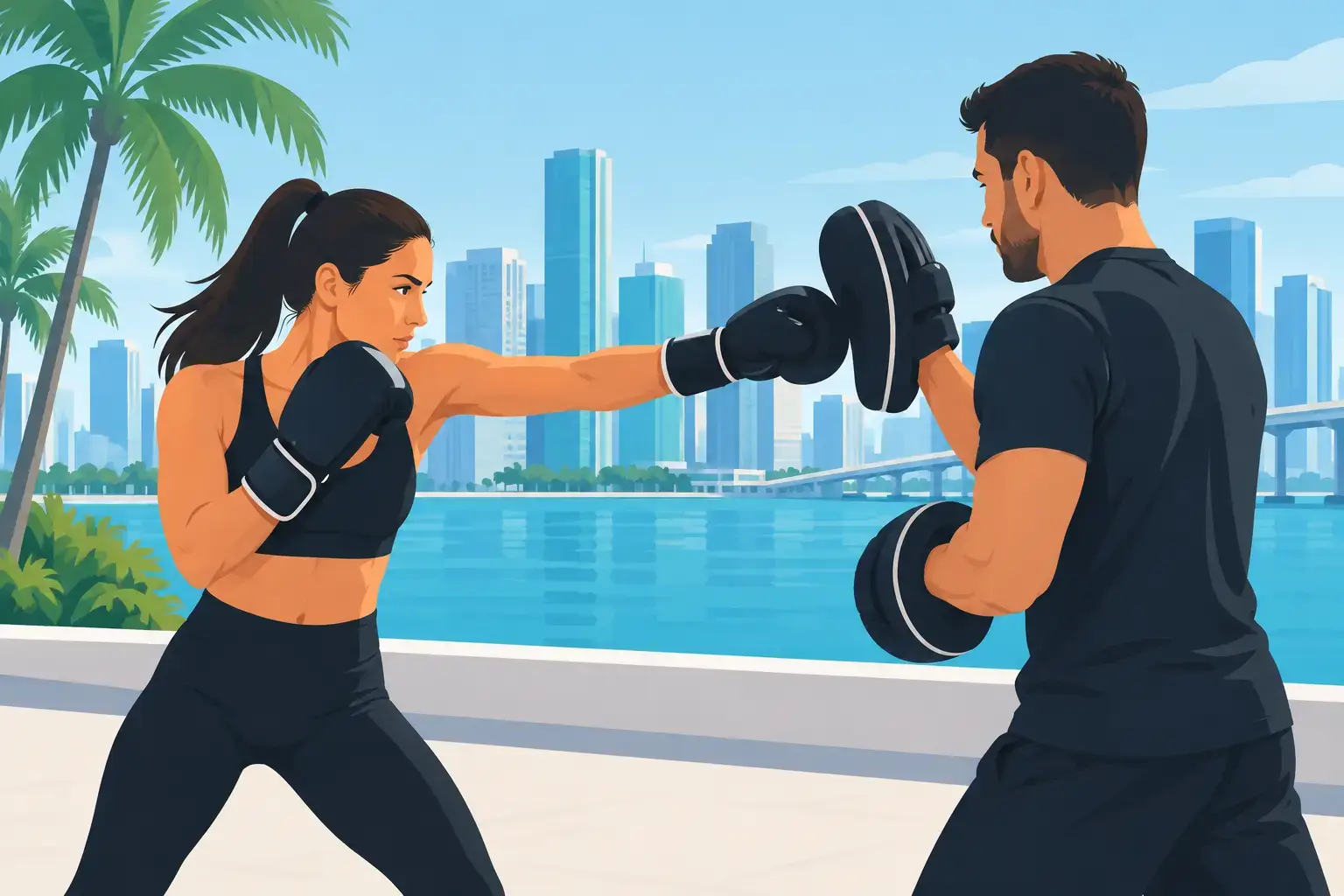
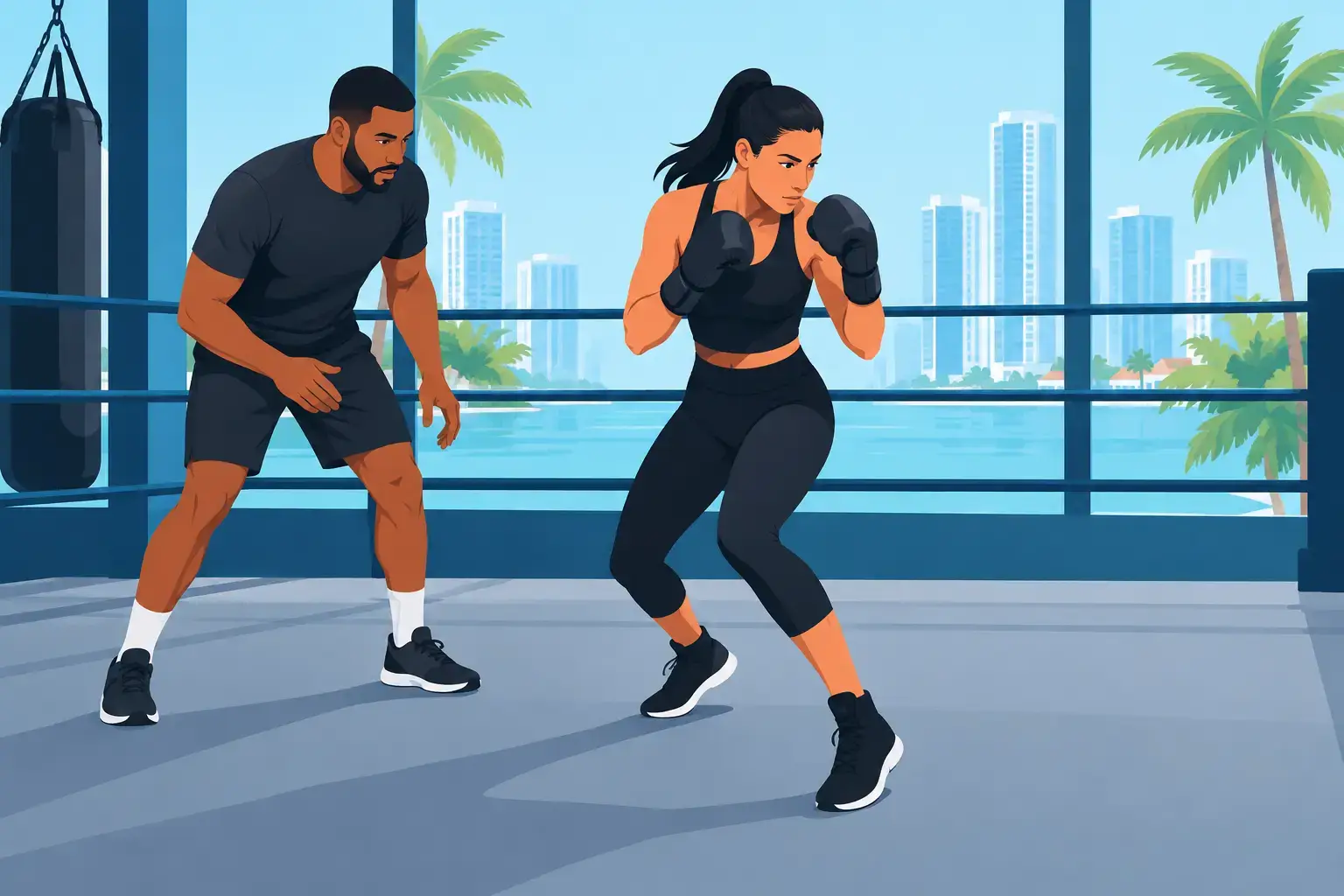
The heavy bag does not care how your day went. It gives immediate feedback. A loose punch lands soft. A rushed kick throws you off balance. A clean combination, delivered with proper posture and intent, feels completely different. That is why people searching for a heavy bag workout class Miami can do far more than burn calories. With the right coaching, bag work becomes a demanding way to build usable striking skill, conditioning, confidence, and discipline.
At Vice City Striking, the bag is not treated like a piece of cardio equipment you hit until the timer runs out. It is a training partner with a purpose. Every round has a technical goal, whether you are learning to turn your hip through a kick, return your hands to guard, move after a combination, or maintain composure when fatigue starts to build.
What a Heavy Bag Workout Class in Miami Should Teach
A good bag class is structured. You should know what you are working on, why it matters, and how to improve it from round to round. That begins before the first punch. Coaches establish stance, balance, distance, and guard so that power has a stable foundation.
For beginners, this usually means learning basic boxing punches, knees, kicks, elbows where appropriate, and simple combinations at a controlled pace. The goal is not to throw everything as hard as possible. The goal is to develop clean mechanics. A straight punch should travel efficiently. A round kick should use the floor, hip rotation, and correct shin placement. Your hands should come home after every strike because a dropped guard is a habit that carries over into pad work, sparring, and real-world self-defense.
As you gain experience, bag rounds become more layered. You may work a boxing entry into a low kick, defensive movement after a combination, a body-head pattern, or a Dutch-style drill that challenges pace and precision. Advanced members can use the bag to sharpen output for competition, but the standards stay the same: balanced stance, controlled breathing, technical strikes, and intelligent movement.
That structure separates authentic striking training from a workout built around random punches and loud music. Both can make you sweat. Only one gives you skills that continue to improve over time.
The Workout Is Full Body, but Technique Comes First
Heavy bag training is demanding because striking uses the entire body. Your legs create force from the ground. Your hips transfer it. Your core keeps you connected and balanced. Your shoulders, back, and arms control the delivery and recovery of each punch. Even your feet are working constantly as you manage range and reposition.
A well-run class can challenge cardiovascular endurance without asking you to sacrifice form for exhaustion. You will likely feel your heart rate rise quickly during timed rounds, especially when combinations include punches, kicks, knees, sprawls, footwork, or defensive movement. The difference is that the work has a technical target. You are not simply trying to survive the interval.
This matters for fitness-focused adults in Downtown Miami, Wynwood, Midtown, Little Havana, and Allapattah who are tired of workouts that feel repetitive after a few weeks. A heavy bag class gives every round a problem to solve. Can you keep your jab sharp late in the round? Can you land a kick without leaning back? Can you exhale, reset, and keep moving when your shoulders get tired?
The result is a workout that builds conditioning with a reason behind it. You leave tired, but you also leave knowing what you practiced.
Why Coaching Changes the Bag Work Experience
It is easy to find a bag and hit it. It is much harder to notice that your rear heel is not turning, your chin lifts when you punch, or your weight is too far forward after a kick. Those details affect power, balance, defense, and the health of your wrists, shoulders, hips, and knees.
A coach sees the habits you cannot always feel. They can adjust your stance, show you how to wrap your hands, correct the angle of a hook, or tell you when to slow down and regain control. That feedback is especially valuable for people starting Muay Thai, boxing, or kickboxing for the first time. You do not need to arrive knowing the language or the combinations. You need to be willing to listen, practice, and stay consistent.
Experienced coaching also helps set the right intensity. There are days to push hard and days to focus on timing, movement, or cleaner technique. If you are returning to training after time away, managing an old injury, or building your base from zero, that distinction matters. Serious training should challenge you, not bury you before you have the chance to improve.
Beginners Belong in a Real Striking Gym
Many people hesitate before their first class because they assume everyone else will be experienced. The truth is that every capable striker started by learning how to stand, how to wrap their hands, and how to throw a jab without overreaching.
A welcoming gym makes that process clear. You should be able to ask questions, get practical direction, and work at an appropriate pace without feeling like you are holding anyone back. At the same time, the environment should still respect the sport. Beginners deserve real instruction, not watered-down drills that never progress beyond a fitness routine.
The best class environment allows new members and experienced athletes to train in the same room with different levels of complexity. One person may be drilling a basic one-two and low kick while another is refining an advanced sequence with angles and counters. Both are working on fundamentals. Both are expected to train with control and respect.
That culture is particularly important for adults who want confidence and self-defense awareness but have no interest in pretending to be professional fighters. You can train seriously without competing. You can learn authentic Muay Thai and boxing skills while using training as your outlet after work. The commitment is to your own progress.
What to Expect at Your First Bag Class
Your first session should feel challenging, but it should not feel chaotic. Expect to begin with a warm-up that prepares your joints, movement, and conditioning for striking. From there, a coach will introduce the stance, individual techniques, and combinations you will use during the round work.
You may start slowly, especially with kicks. That is normal. Good power comes from sequence and balance, not from forcing the bag to swing across the room. Focus on hearing the coach, breathing with every strike, and returning to position after you attack.
Bring comfortable workout clothes and water. If you have hand wraps and gloves, bring them, but do not let a lack of equipment stop you from trying class. Ask in advance what is available and what you should bring for your first visit. Most importantly, arrive ready to learn rather than ready to prove something.
Bag Work That Carries Into the Rest of Your Training
The heavy bag is one part of a complete striking program. It helps you develop rhythm, impact tolerance, conditioning, and combination flow. Pads let you work timing and reactions with a partner. Drilling teaches you to apply technique against movement. Clinch training develops control at close range. Sparring, when appropriate and properly supervised, tests composure and decision-making.
If your goal is fitness, bag rounds may become your favorite high-output training day. If your goal is self-defense, they help you build striking mechanics under fatigue. If you want to fight, they are a reliable place to sharpen technique and conditioning between pad work, drilling, and sparring. The value depends on how you train, which is why class structure and coaching matter so much.
A bag workout should leave you feeling earned, not beaten up for no reason. Start with a free introductory class, listen closely, and give yourself time to learn the details. The first clean combination you throw with balance and confidence is usually the moment the training starts to feel like more than a workout.